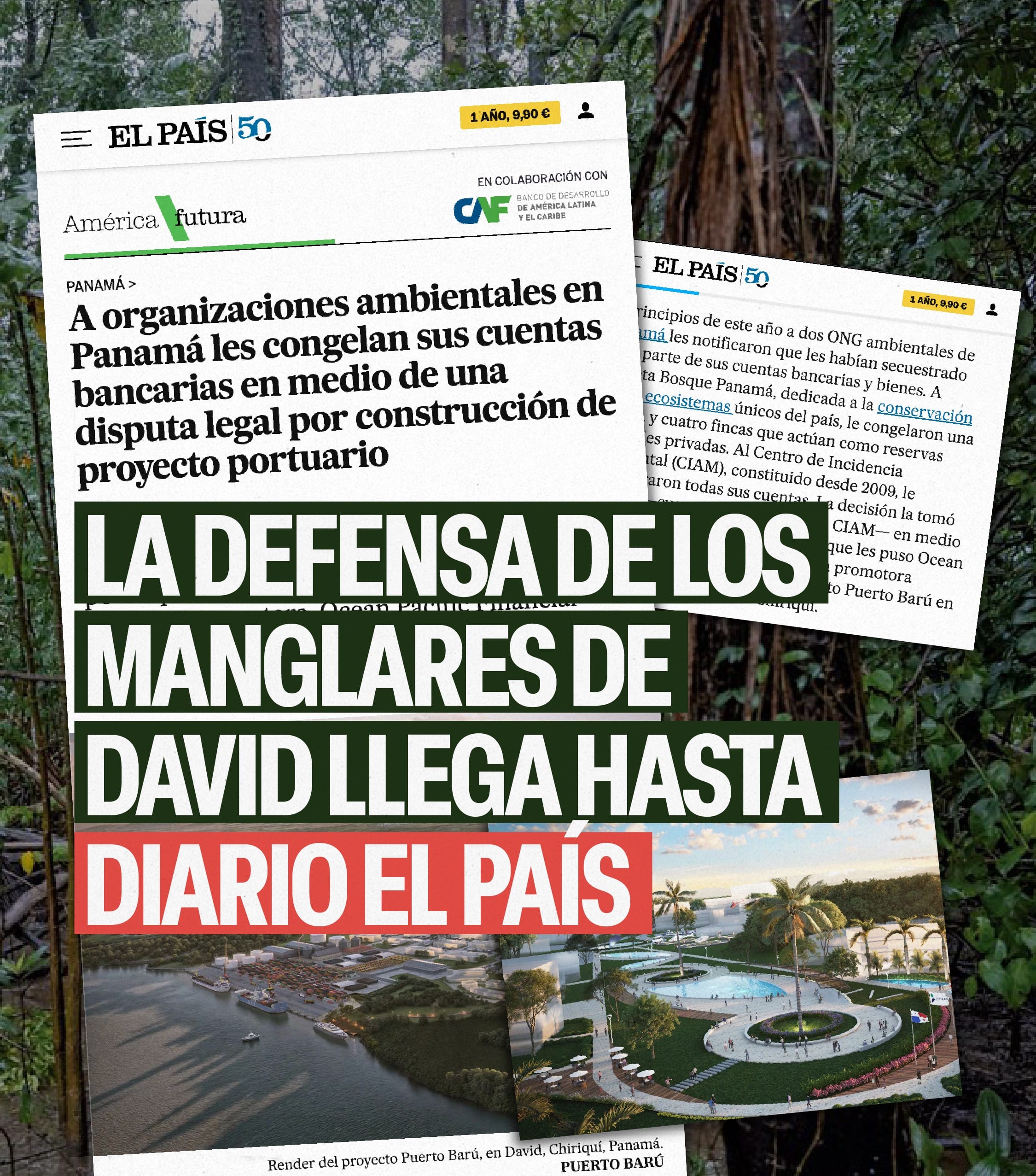
The newspaper El País focuses on what is happening in Panama and highlights the participation of communities, organizations, and activists who have spoken out against the Puerto Barú project. But what the report reveals goes beyond an environmental conflict; it exposes a deeper tension: what happens when defending nature begins to have legal, economic, and political consequences?

From the territory to the courts
At the beginning of this year, two key environmental advocacy organizations, Adopta Bosque Panamá and Centro de Incidencia Ambiental (CIAM), received unexpected notification that their bank accounts and assets had been frozen. This was not an isolated incident; it occurred amidst legal proceedings initiated by the project’s developer, Ocean Pacific Financial Services.
Since 2023, these organizations had been questioning the construction of the port because of its potential impacts on a critical ecosystem: the protected mangroves of the Gulf of Chiriquí.
A dispute over the truth
The conflict is not only environmental, it is also narrative-driven. On one side are organizations warning of risks: dredging, alteration of marine ecosystems, and impacts on mangroves and the species that depend on them. On the other side is the development company, which is spreading misinformation in response to these claims and maintains that the legal actions are part of what it considers a smear campaign.
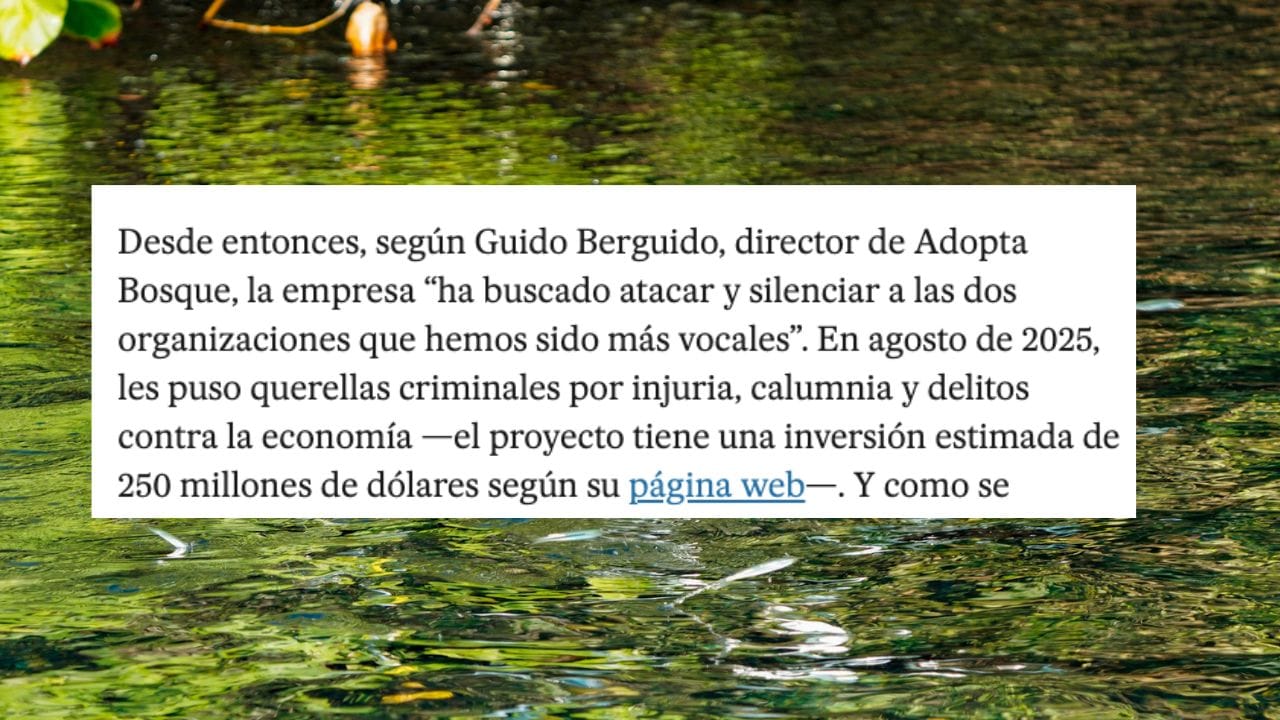
Guido Berguido, director of Adopta Bosque, states in El País that the company “has sought to attack and silence the two organizations that have been the most vocal.” In August 2025, it filed criminal complaints against them for libel, slander, and economic crimes. The project promoter’s actions “are a classic example of what they call SLAPP,” the director comments, referring to what in English is known as «Strategic Lawsuit Against Public Participation” and that alludes to intimidating litigation in which the goal is not necessarily to win, but to exhaust the other.

Legal actions that harm democracy
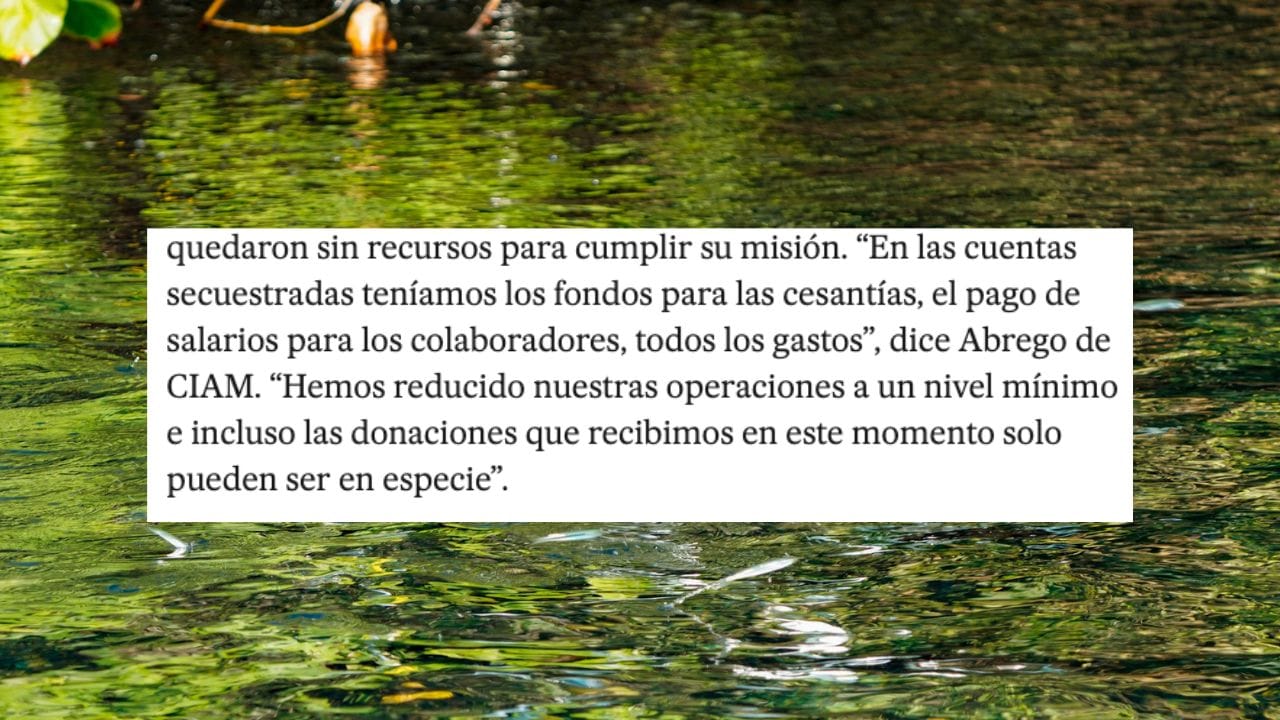
According to the report,CIAM and Adopta Bosque are experiencing difficult times: they have run out of resources to fulfill their mission.
Environmental organizations are not giving up; they continue to raise their voices as best they can. As the report indicates, authorities, as Panama’s Minister of the Environment, Juan Carlos Navarro, told the media locals who, on a personal level, considered it an unfortunate measure. “It does nothing to benefit the national dialogue that needs to take place on vital issues such as new projects that will have an environmental impact,” he asserted.
The Escazú Ahora Regional Network also published a statement highlighting its concern. Panama is one of the countries that has already ratified the Escazú Agreement, one of whose central principles is precisely the right to citizen participation in environmental management. “That this is happening in Panama sets a bad precedent for the region, for Central America,” says Carolina Sánchez, spokesperson for the network.Fossil-Free Wider Caribbean Network “Besides the fact that we are in a time of great polarization, environmental organizations have suffered a huge economic impact over the past year due to the foreign policies of other countries. And this puts us at a crossroads.”
When conflict ceases to be invisible
What is happening in Panama is no longer happening in silence; the voices defending the mangroves are being heard beyond its borders. Today, they lead the narrative of truth, of defense, and above all, of courage, because despite how difficult it has been to sustain this campaign, they are not intimidated by power and continue with arguments and supporting science.





 EN
EN