

Who defends what makes Panama unique
Puerto Barú debates open environmental issues in Panama: dredging, doubts about water supply and legal proceedings against mangrove defenders.


The actress of Bridgerton and Sex Education visited the Gulf of Chiriquí and shared images of the landscapes she encountered during her time in Panama. Her visit raises an important question once again: if the world comes to Panama seeking nature, why aren’t we investing more in protecting it?
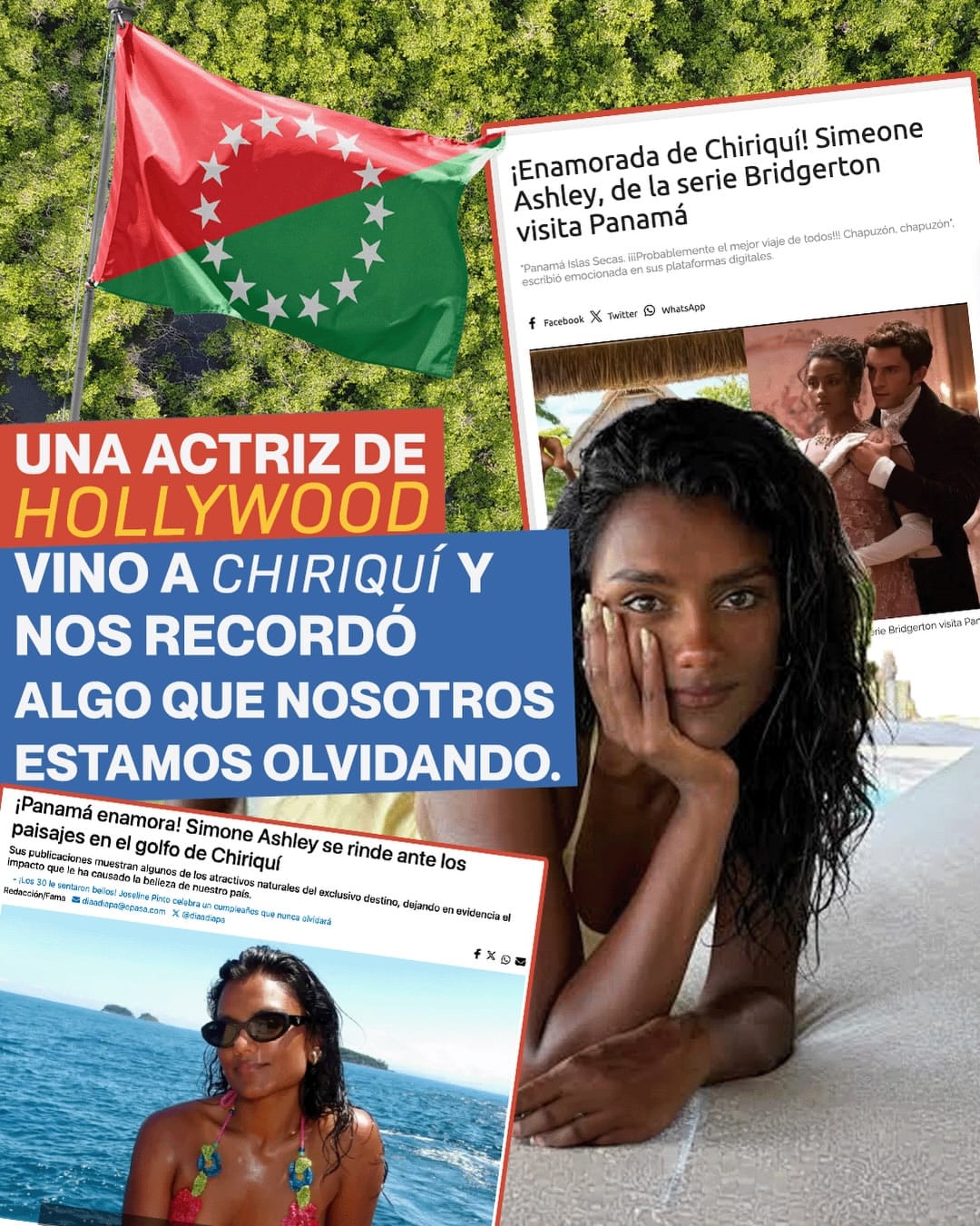
Sometimes we need someone to come from afar to remind us of the value of what we have right in front of our eyes. The British actress Simone Ashley, known worldwide for her roles in Bridgerton and Sex Education, recently visited the Gulf of Chiriquí, Panama, and shared part of her experience surrounded by nature.
Sea, forests, tropical landscapes, and some of the most extraordinary ecosystems of the Panamanian Pacific were part of the backdrop. Her visit leaves a reflection that goes far beyond a celebrity enjoying Panama; it shows that nature can also be a driver of development.
People who travel thousands of kilometers to visit Panama are looking for something that they cannot find just anywhere: mangroves, dolphins, whales, birds, beaches, forests, communities, and cultures linked to those territories.
The Gulf of Chiriquí brings together all these elements and has enormous potential for developing experiences of Sustainable tourism in Chiriquí capable of generating economic opportunities while preserving what makes the destination unique.
Talking about the David’s Mangroves is not just about biodiversity; nature also sustains economies. An example of this can be found in the mangroves of Remedios, San Félix and San Lorenzo, in the Gulf of Chiriquí whose financial contribution was estimated at more than B/.27 million per year, according to data cited by MiAmbiente, UNDP and CI.
This data allows us to look at mangroves from another perspective; a protected mangrove supports fishing-related activities, protects the coasts, harbors biodiversity, and creates the conditions for activities such as kayaking, wildlife observation, community tourism, and other nature-related experiences.
This question takes on special relevance in the context of the debate on Puerto Barú, in David, Chiriquí, the port project has opened a discussion about the future of a territory where mangroves, biodiversity, communities and economic activities directly linked to the health of ecosystems coexist.
Perhaps that’s the conversation Panama needs to have; it’s not about choosing between nature and development, it’s about asking ourselves what kind of development we want. Because we probably don’t need to build more to offer more.
Simone Ashley’s visit might seem like a small story: an international actress arrived in Chiriquí, explored its landscapes, and shared her experiences with the world. But behind those images lies something much bigger: Panama already possesses something that millions of people around the globe are seeking extraordinary nature.
The development we seek does not necessarily need more cement; it needs more protected nature and local businesses that preserve and sustain more experiences capable of connecting people with what Panama already has.
#DefendTheMangroves


 EN
EN