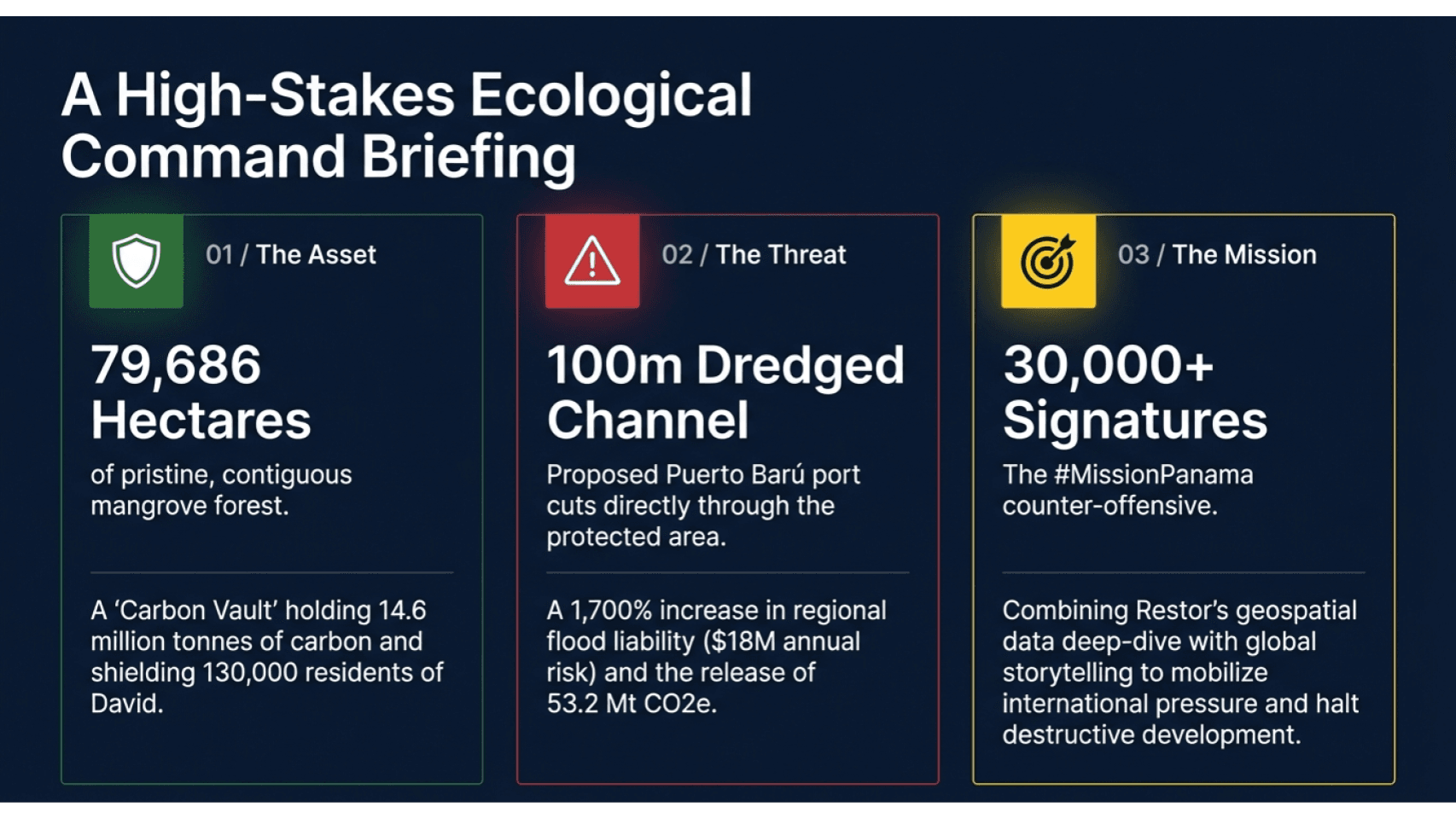
Spanning nearly 80,000 hectares, this territory represents not only a natural heritage for Panama, but also a global climate asset. A true refuge for biodiversity, a natural shield against flooding, and a critical carbon reserve for the planet.
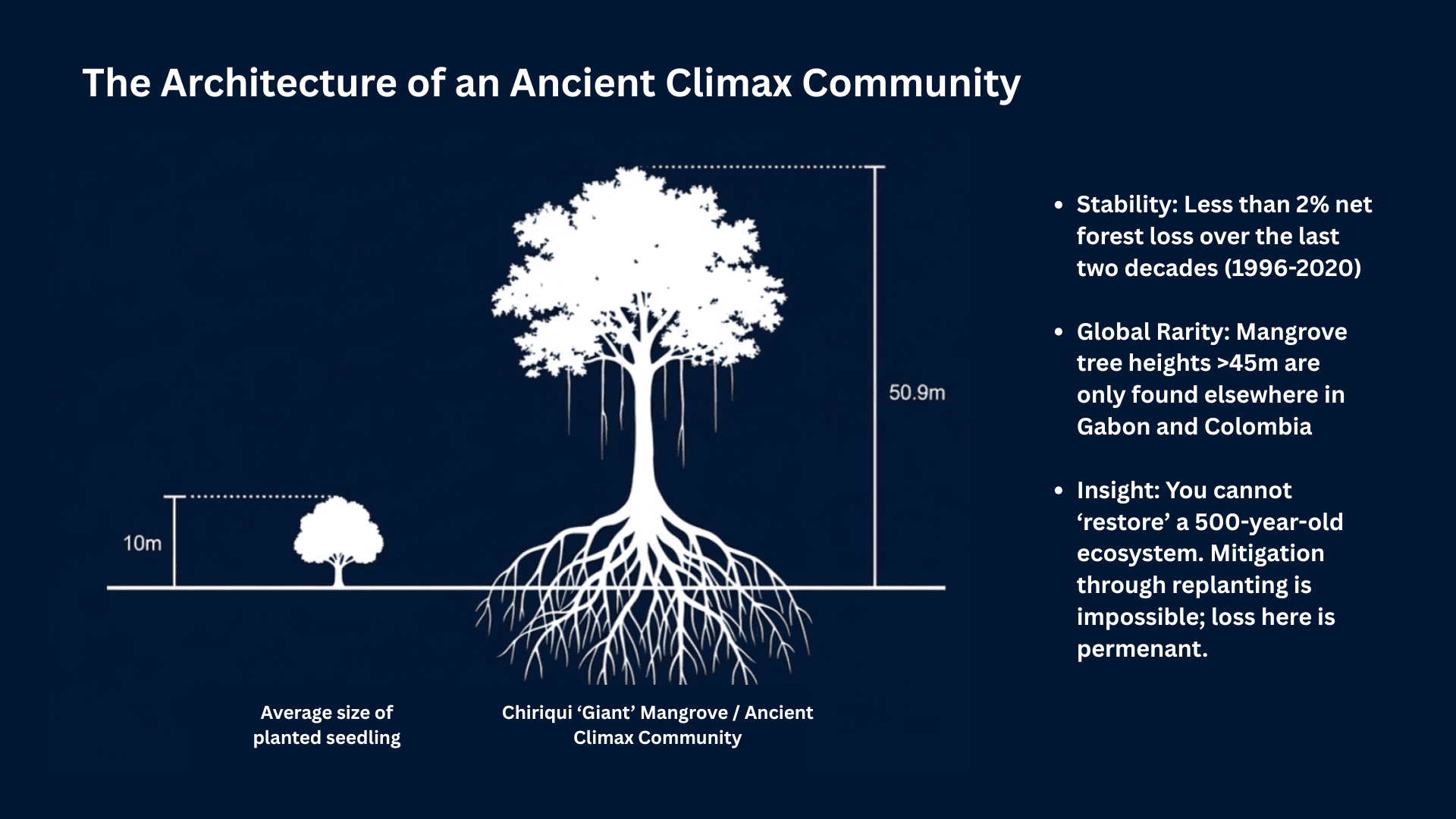
But it is also an extraordinarily fragile ecosystem. While the world is losing forests and degrading ecosystems at an unprecedented rate, the mangroves of Chiriquí have remained stable for decades, with less than 2% forest loss in the last twenty years. Here survive some of the tallest mangroves on the planet, true giants exceeding 50 meters, alongside threatened species, ecological corridors, and natural processes that simply cannot be rebuilt once destroyed.

Science tirelessly reiterates, with increasing clarity, that not everything that can be destroyed can be recovered, and that is precisely what makes this conversation so urgent. Today, the Puerto Barú project proposes to intervene in the heart of this system through dredging and modifications to a territory whose stability depends on extremely delicate balances. Historical evidence demonstrates that even small alterations in the natural flow of water have caused complete forest collapses in just a few years. What follows is not just a technical report; it is an X-ray of one of Panama’s most important ecosystems and a statement that transcends borders.
The Mangroves of Chiriquí Depend on the Natural Flow of Water
These ecosystems survive thanks to the balance between tides, nutrient circulation, and natural salinity regulation. But satellite studies show something alarming. When the tidal flow is interrupted by sediment buildup, the water stops circulating, salinity increases dramatically, and the forest begins to die.
The Puerto Barú project threatens this delicate balance through dredging and the modification of natural channels. What seems like a minor alteration can trigger an irreversible ecological collapse. In just a few years, a healthy mangrove forest can be transformed into a «ghost forest.»
 The giant mangroves of Chiriquí, the Amazon of the Ocean
One of the most extraordinary features of these mangrove trees is their height, which exists in only a few places on the planet: Gabon, the San Juan River in Colombia, and Panama. This impressive height reveals that we are looking at an ancient, stable ecosystem that has remained virtually untouched for decades.
A true “Amazon of the Ocean” and just as the Amazon, a 55-million-year-old rainforest, cannot be restored, these giant mangroves cannot be replaced either.
 Restor Report (p. 8) Climatic and Ecological Value of the threatened mangroves of Chiriqui Province, Panama
The Carbon Hidden Beneath the Mangroves
The most valuable aspect of mangroves is not always visible; beneath their roots lies a vast natural reserve of carbon accumulated over centuries, even millennia. In this area alone, more than 11 million tons of carbon are stored, trapped in flooded soils and protected by natural processes. Unfortunately, what functioned as a climate sink for thousands of years can become a carbon pump if the soil is altered by activities such as dredging; this balance can collapse.
The Green Shield
The mangroves of Chiriquí act as a natural barrier that today helps reduce flood damage, saving nearly $1 million a year.
Restor Report (p. 14) Climatic and Ecological Value of the threatened mangroves of Chiriqui Province, Panama.
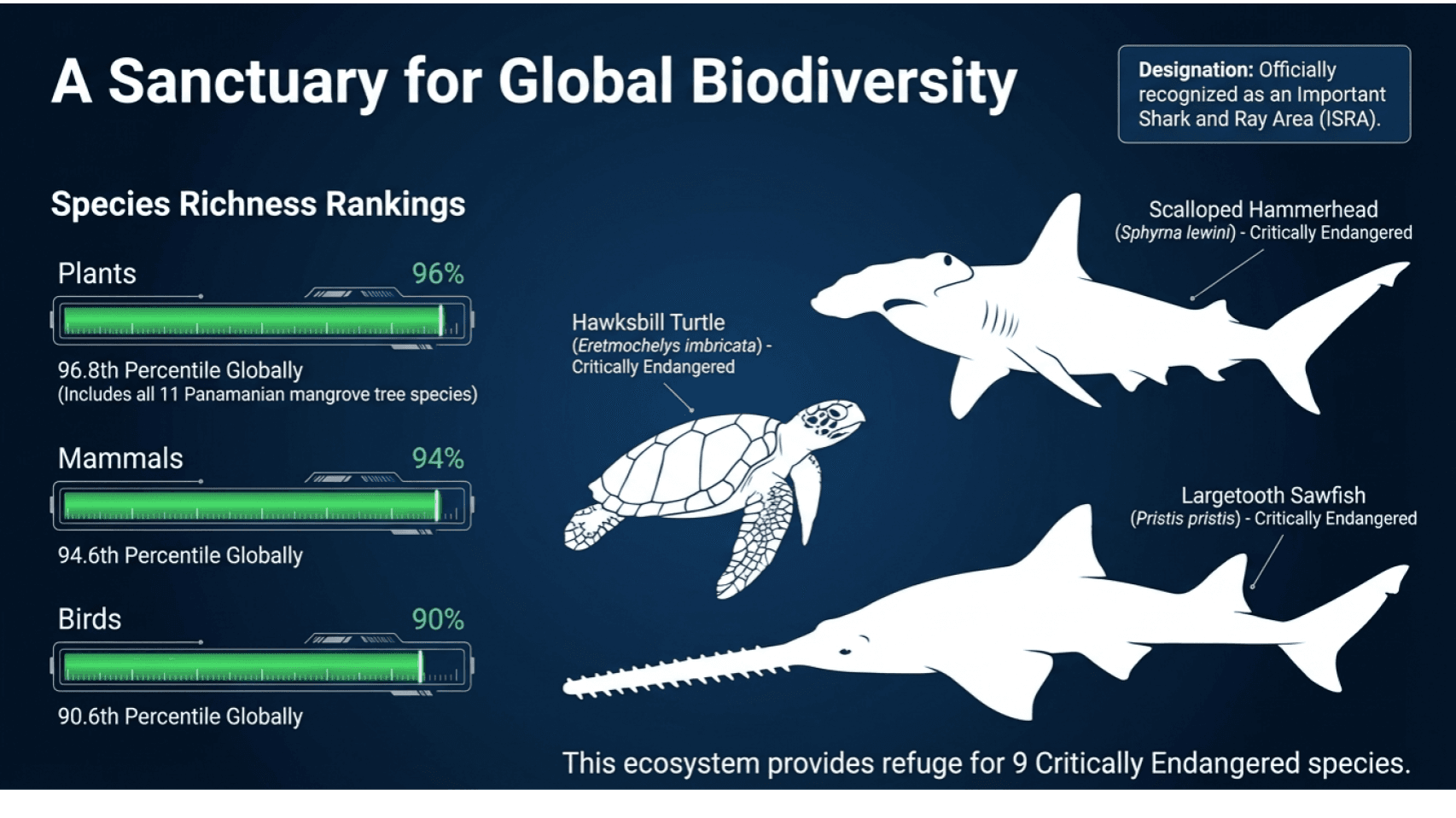
Today, science gives voice to one of the most valuable and intact natural systems that still survive in America. The data gives relevance to an ecosystem that for years silently did its work protecting coasts, sustaining species and communities, maintaining an ecological balance that took thousands of years to build.
Protecting these ecosystems is not just a discussion about conservation. It is also related to the future of…Sustainable Tourism in Chiriquí, food security, the Marine Conservation of Panama and the emerging principles of Rights of Nature, which recognize nature as a subject of law.
Some losses can be mitigated, but some ecosystems, once altered, disappear forever. Science has done its part; now it’s up to us. #DefendTheMangroves



 The giant mangroves of Chiriquí, the Amazon of the Ocean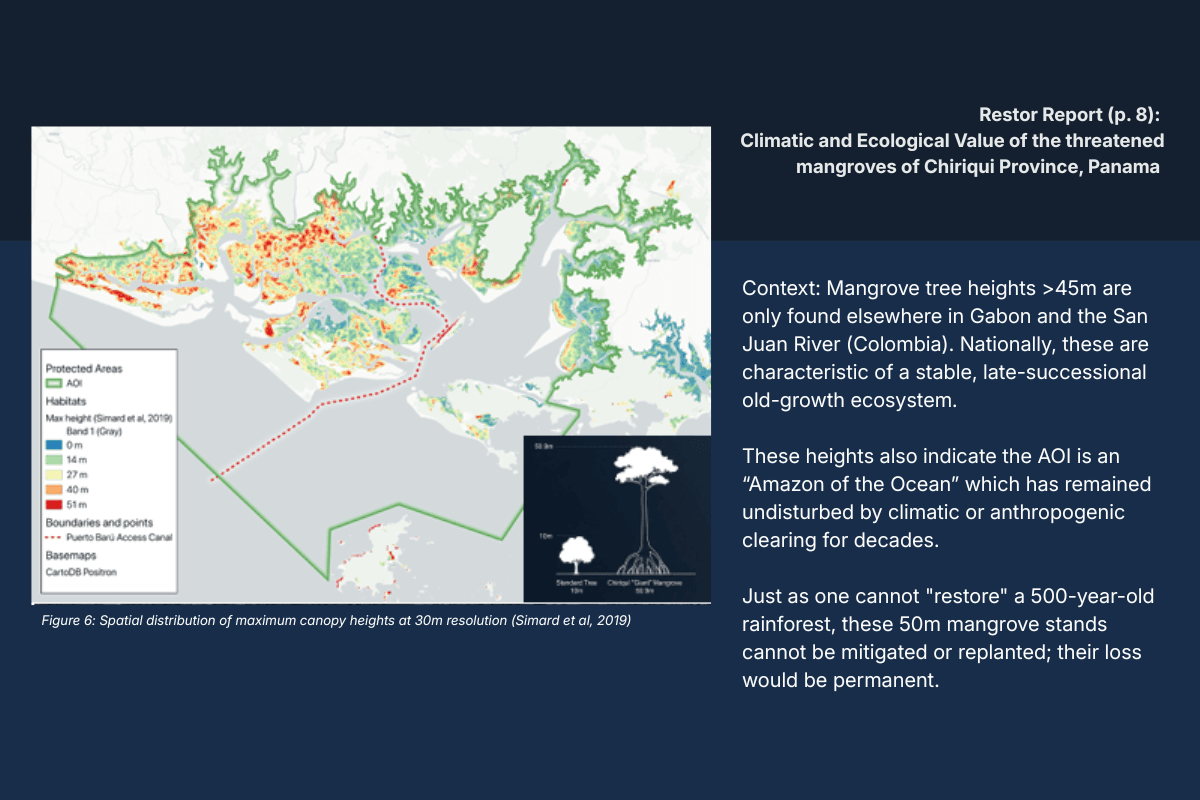
 The Green Shield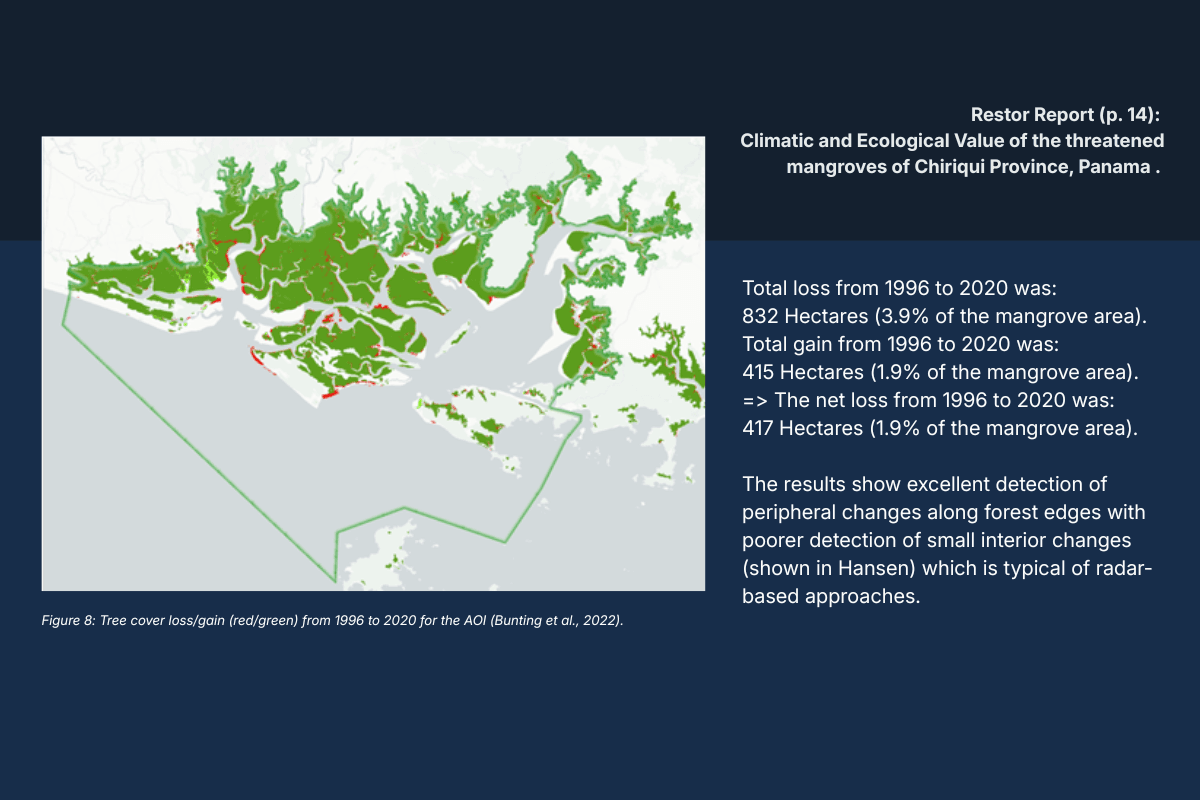


 EN
EN