From a local conflict to a global cause
A lot has happened surrounding Puerto Barú. What began as a project located in a specific area of Panama has now transformed into a political, international, and deeply public debate. But the most relevant aspect is not only the scale the discussion has reached, but who is speaking out. The No to Puerto Barú campaign is no longer just an environmental opposition: it is a network of voices driving a broader conversation about development, transparency, human rights, and the rights of nature.
When the world begins to look
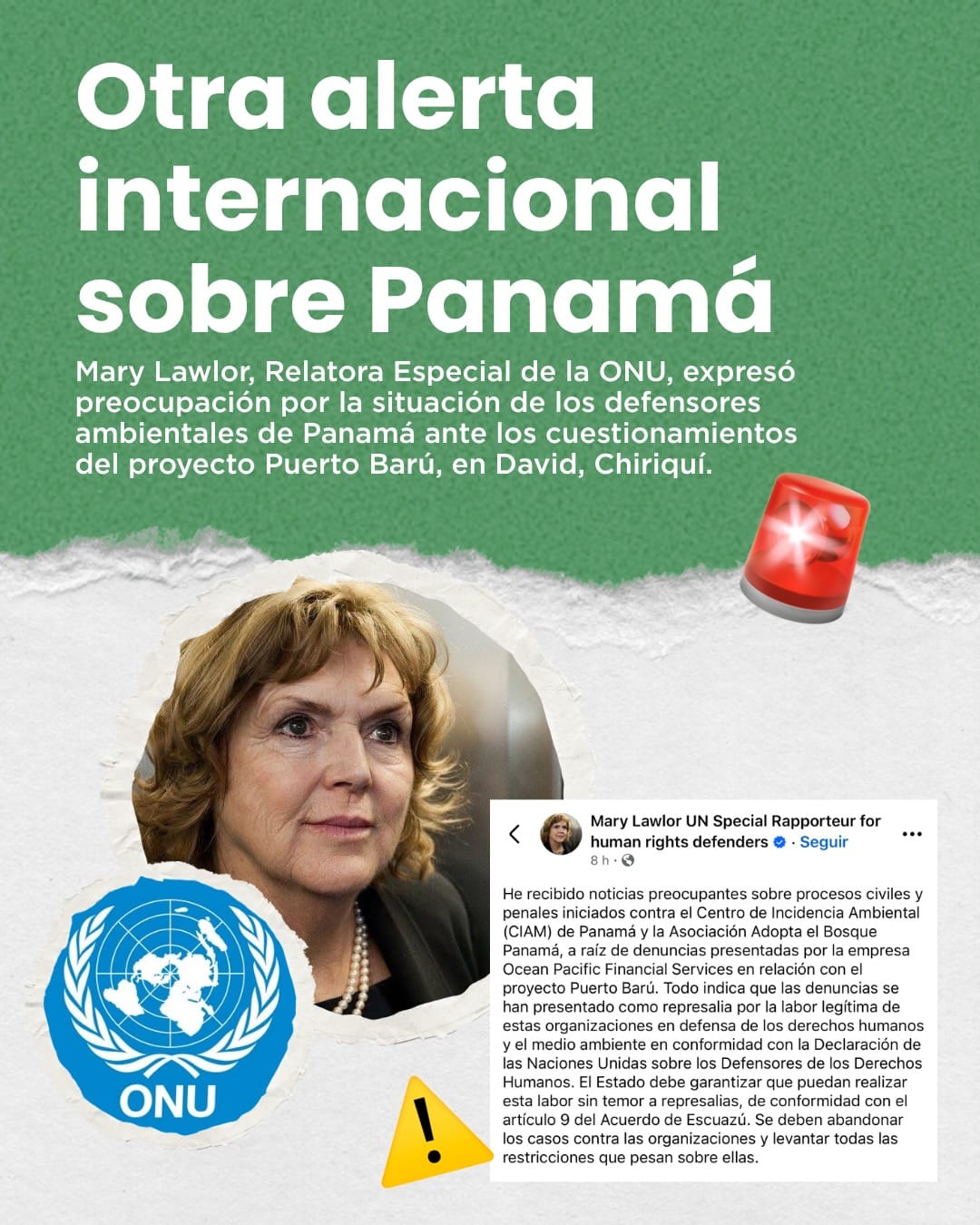
One of the clearest turning points has been the entry of international actors such as the United Nations Special Rapporteur on Human Rights Defenders, Mary Lawlor, who expressed concern about the legal actions directed against the organizations Centro de Incidencia Ambiental (CIAM) and Adopta Bosque.

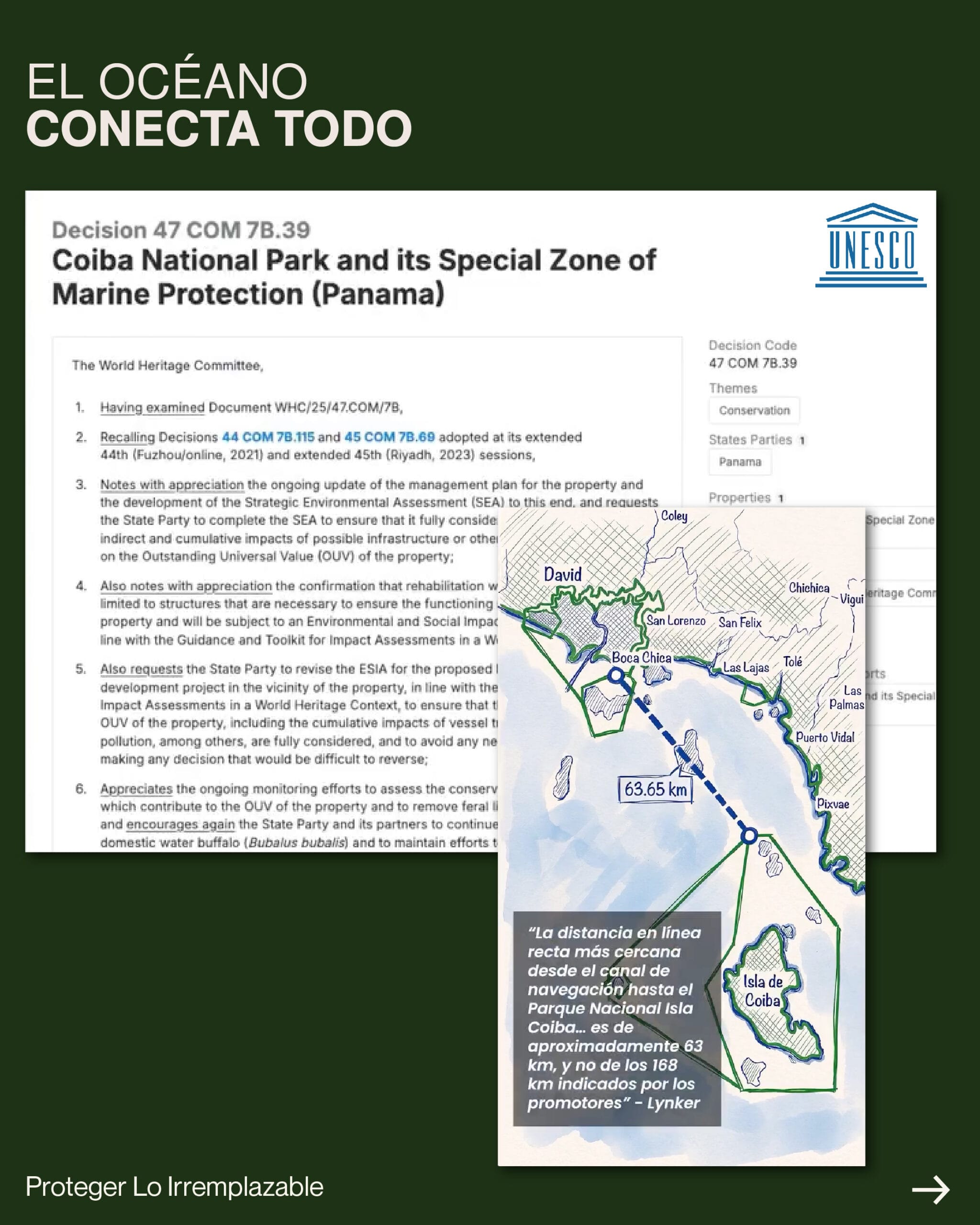
In addition, UNESCO has requested the Panamanian State to review the Environmental Impact Study of the Puerto Barú project, in order to ensure that there are no negative effects on Coiba National Park, a site declared a World Heritage Site.

With this, the case ceased to be a local matter; it became part of a global conversation where international standards matter.
The dispute over the truth
As these voices began to amplify, so did the response from the developer of the Puerto Barú project, who issued public statements denying impacts and questioning the criticisms, opening a new stage in the conflict: the dispute over the narrative.
It’s no longer just about evaluating a project, but about defining which version of reality takes hold in public opinion. This kind of tension is common when environmental issues escalate, and it’s usually a sign that the debate has reached a significant political level.
The government enters the scene
In this context, the Panamanian government has been forced to contradict the developer of Puerto Barú, through official statements, indicating that it initiated a technical and scientific analysis process in line with UNESCO’s request.
This marks a key point in the recognition that there are international commitments that must be considered. When a country enters into these kinds of processes, its decisions cease to be exclusively internal and become subject to global scrutiny.
Defending nature has consequences
Not all voices participate on equal terms; organizations that have led the environmental defense, such as CIAM and Adopta Bosque, have faced lawsuits and legal measures that include the seizure of accounts and lands.
In response, the Greater Caribbean Fossil-Free Network issued a statement of solidarity, highlighting an uncomfortable reality for Latin America: in many countries, defending nature comes at a cost. When legal mechanisms are used to pressure or silence dissent, the discussion ceases to be solely environmental and becomes a matter of rights and democracy as well.
When politics takes a stand
The debate has also escalated to the internal political sphere; Deputy Janine Prado Castaño brought the issue to the National Assembly, reiterating UNESCO’s warning and pointing out the potential risks of the project to the mangroves of David and the marine system that connects with Coiba National Park.
These types of interventions mark a change of scenario where the conflict ceases to be on the margins and enters directly into the State’s agenda.
A network of voices that amplifies
Meanwhile, the visibility of the case has continued to grow, with media outlets, both national and international, beginning to cover the situation, while new organizations and actors are joining the conversation.
Today, the campaign has the support of more than 60 organizations and over 30 collaborators, which has amplified the message and sustained the discussion in various forums. But beyond the numbers, what’s truly important is building a network that validates and reinforces the content, generating sustained pressure.
Panama enters the global conversation
Amid this controversy, Panama has also begun to position itself in a broader debate where the country, together with the Global Alliance for the Rights of Nature, is moving towards a possible Universal Declaration of the Rights of Nature within the framework of the United Nations.
This move is not insignificant; it implies that the discussion about Puerto Barú is part of a larger question about how we understand the relationship between development and nature in the 21st century.
What we are seeing is not just the evolution of an environmental conflict, it is the result of multiple voices that, from different places, science, politics, civil society and the international community, are pushing the same question: what kind of future do we want to build?
And in that scenario, something becomes evident
If nature has rights, then defending it is also a right.





 EN
EN