When we think of the oceans, we often picture whales, dolphins, or vibrant coral reefs. But there is one species that connects all these ecosystems, and its story reminds us why protecting nature means protecting an entire web of life.
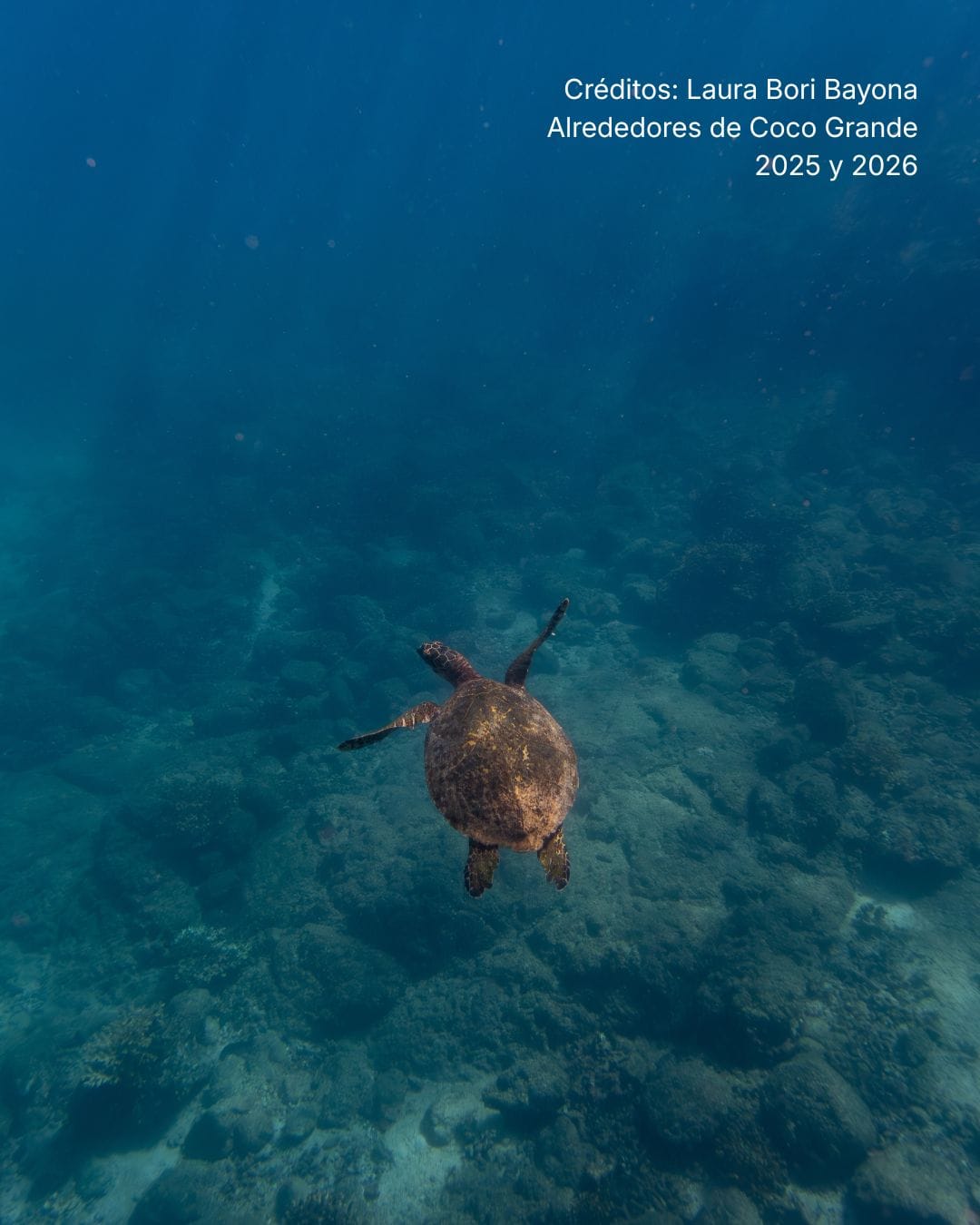
The hawksbill turtle (Eretmochelys imbricata) is one of the most emblematic marine species on the planet, it is also one of the most threatened and although it spends much of its life swimming among reefs, its history is deeply connected with the mangroves of Panama.

The gardener of the reefs
The hawksbill turtle plays a unique role in the ocean, unlike other sea turtles; it feeds mainly on sea sponges, organisms that can grow on corals and compete with them for space and resources.
By naturally controlling these populations, it helps maintain the ecological balance of coral reefs, allowing hundreds of other species to find shelter, food, and breeding grounds.
For this reason, many scientists consider the hawksbill turtle a true gardener of the reefs. Its presence contributes to the health of ecosystems that support fish, crustaceans, and numerous other marine species of ecological and economic importance.
No two hawksbill turtles are alike.
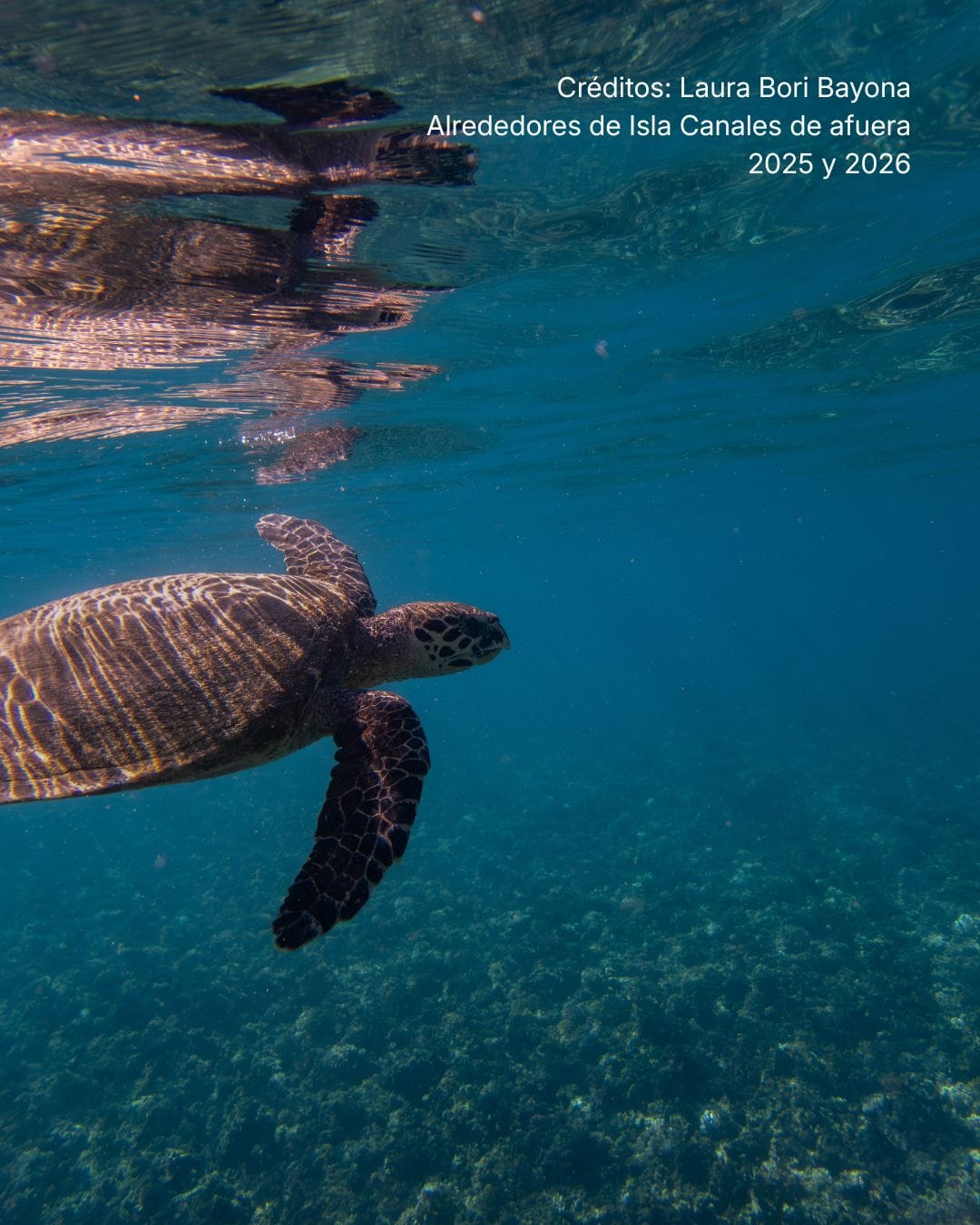
If you look closely at a hawksbill turtle, you’ll discover something fascinating: the scale patterns on its shell are unique to each individual. Just like fingerprints in humans, no two hawksbill turtles are exactly alike.
This feature allows researchers and conservationists to identify specific individuals during monitoring and tracking programs, helping to better understand their migratory routes, habits, and threats. Each turtle carries its own story written on its shell.
Beauty can also be a threat
For decades, the hawksbill turtle was hunted for a reason as simple as it was devastating: the beauty of its shell. Its characteristic amber and brown hues were used to make combs, jewelry, glasses, ornaments, and handicrafts sold in various parts of the world. This exploitation brought the species to the brink of collapse; today, the hawksbill turtle is listed as a critically endangered species.
In Panama, the capture, sale, and use of hawksbill turtle products are prohibited by law, a crucial measure for their conservation. However, threats persist. Habitat loss, pollution, and alterations to coastal ecosystems continue to jeopardize their survival.
Panama, a refuge for the hawksbill turtle
Panama is home to five of the world’s seven species of sea turtles. Among them, the hawksbill turtle finds refuge in important ecosystems of the Panamanian Pacific, especially in the Gulf of Chiriquí region.
Areas like the Gulf of Chiriquí National Marine Park and Coiba National Park are part of a network of habitats essential for their feeding, movement, and survival. These ecosystems do not function in isolation; coral reefs, mangroves, estuaries, and coastal zones form a single, interconnected ecological network.
What happens in the mangroves also affects the hawksbill turtle
The David Mangroves in Chiriquí constitute one of Panama’s most important coastal ecosystems. These mangroves serve as natural nurseries for fish and other marine species, filter sediments, store carbon, and help maintain the quality of coastal waters.
Furthermore, they form part of the ecological system that connects the estuaries, reefs, and marine protected areas of the Gulf of Chiriquí. For this reason, concerns about projects that could alter these ecosystems extend beyond local boundaries.
UNESCO itself has requested a review of the potential indirect impacts that the Puerto Barú project could have on Coiba National Park, a site recognized as a Natural World Heritage Site. The concern relates to the effects that activities such as dredging could have on interconnected marine ecosystems, including habitats used by numerous marine species.
Protecting the hawksbill turtle means protecting entire ecosystems.
The story of the hawksbill turtle reminds us of a simple truth: nature is interconnected. When we protect a reef, we also protect the species that depend on it. When we protect a mangrove, we protect estuaries, fisheries, reefs, and marine biodiversity. And when we protect these ecosystems, we also protect the future of extraordinary species like the hawksbill turtle.
Because defending the hawksbill turtle is not just about saving a species, it’s about protecting the web of life that keeps the ocean healthy.





 EN
EN