There are moments when a local dispute stops being local and becomes a global conversation. That is exactly what is happening today in Panama as UNESCO steps in. The UNESCO World Heritage Committee has asked the Panamanian State to review the Environmental Impact Assessment (EIA) of the Puerto Barú project.
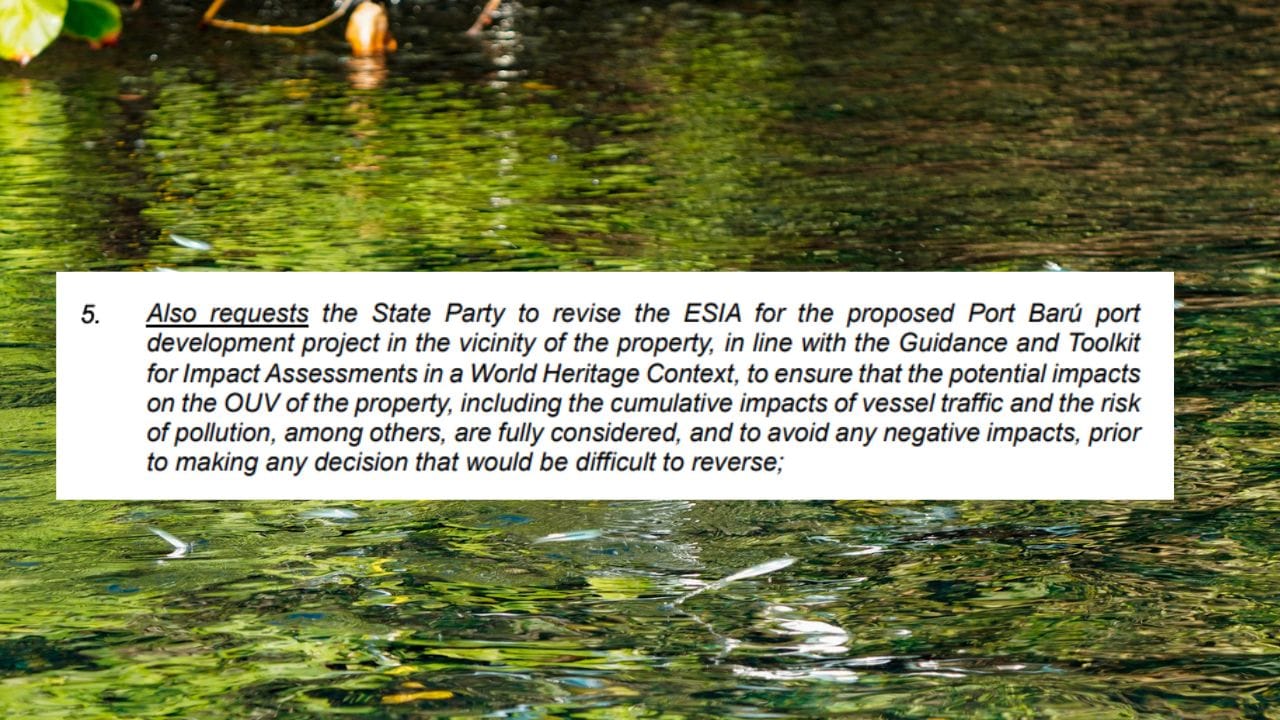
This is not a minor gesture; it is a formal warning within the framework of protecting a site declared a World Heritage Site.

Source: UNESCO State of conservation of properties WHC/25/47.COM/7B, p. 47 inscribed on the World Heritage List
UNESCO requests assurances that there will be no negative impacts on Coiba National Park before making any potentially irreversible decisions. The message is clear: when a site has Outstanding Universal Value, its protection is not just a national responsibility, it is a global one.
The government’s response
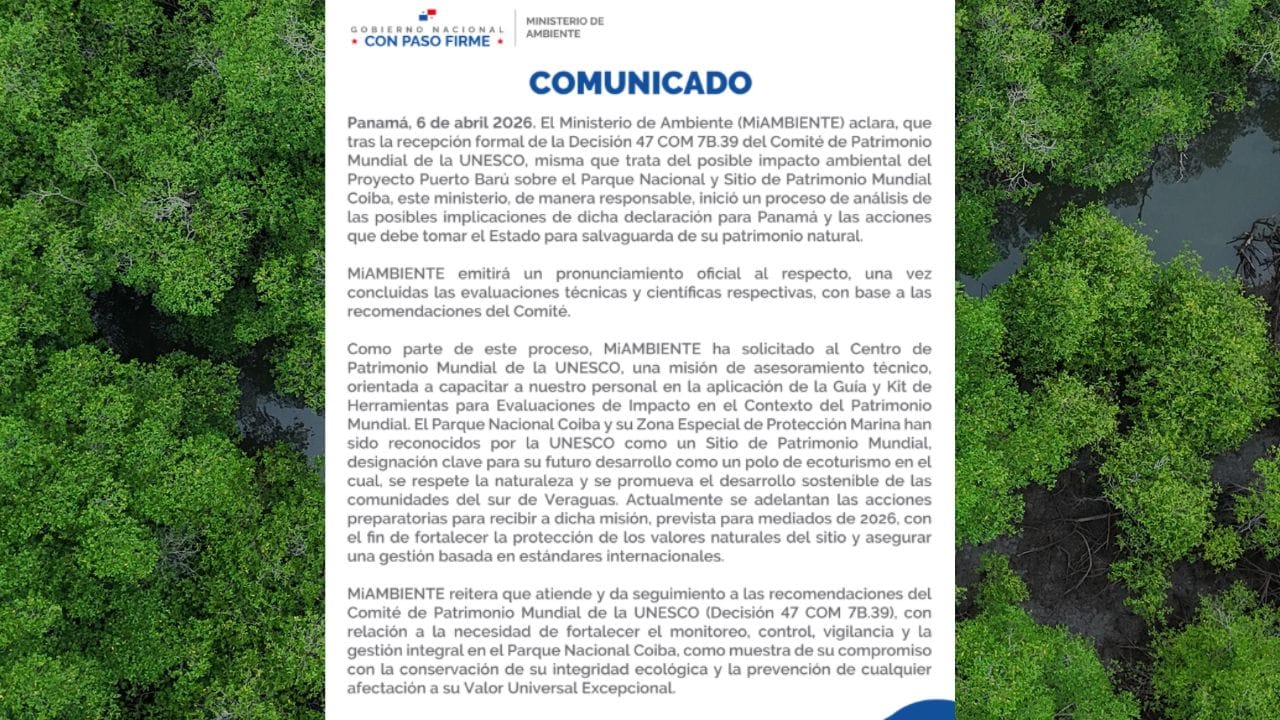
Following this decision, the Panamanian Ministry of the Environment reported that it has initiated a technical and scientific analysis to assess the implications. The government itself indicated that this process is being carried out responsibly and in accordance with the Committee’s recommendations, including a request for technical assistance from UNESCO.
Press Release from the Ministry of the Environment (MiAMBIENTE)
This point is key: Panama faces not only an environmental decision, but also compliance with international commitments related to the conservation of its natural heritage.
A Growing Debate
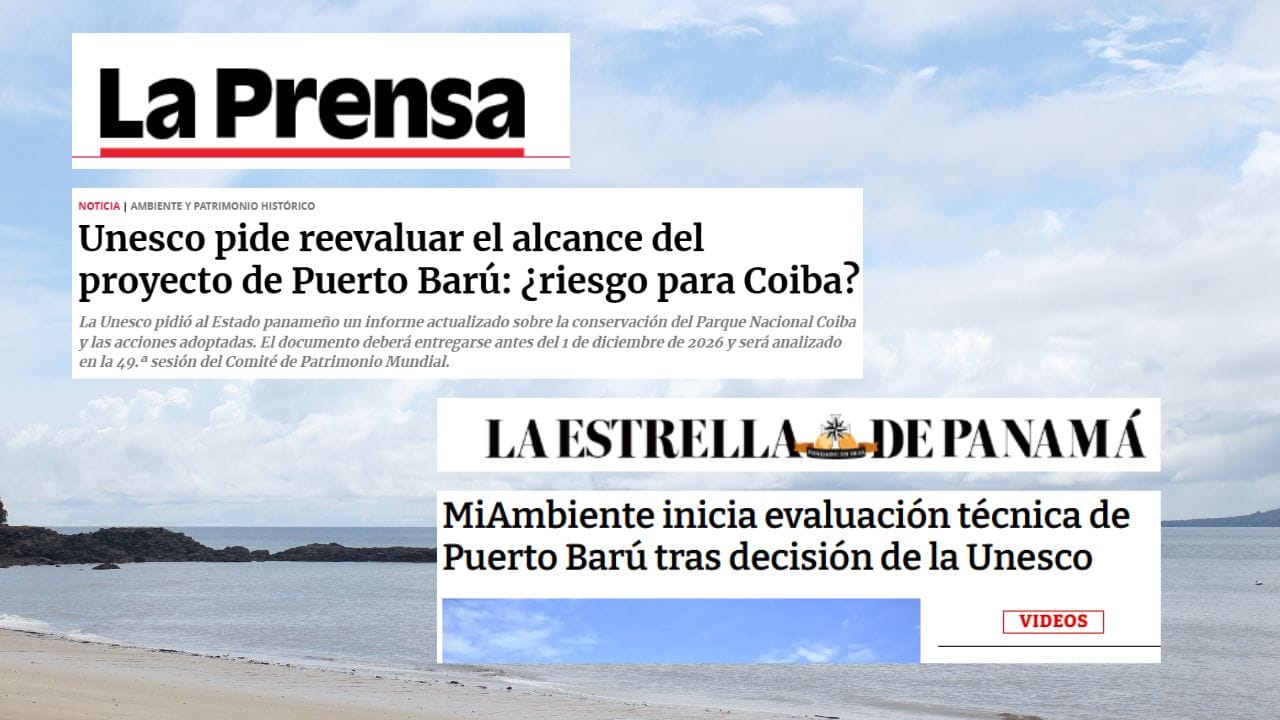
Meanwhile, the issue has risen in the public sphere. Media outlets such as La Estrella de Panamá and La Prensa have highlighted that the government initiated technical evaluations following UNESCO’s decision and that the international organization requested a reassessment of the project’s scope due to its potential impact on Coiba Island.
At the same time, conflicting versions have also circulated accusing Puerto Barú of spreading misinformation.

Puerto Barú Statement
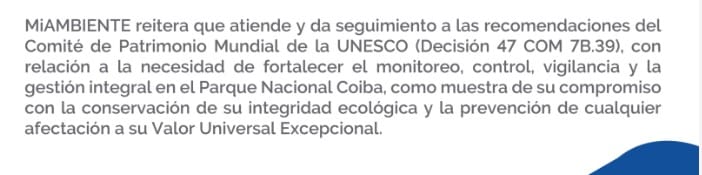
To which the government responded regarding the veracity of UNESCO’s request

Press Release from the Ministry of Environment (MiAMBIENTE)
On the one hand, the government has refuted interpretations it considers inaccurate, and on the other, the developer of the Puerto Barú project has issued statements assuring that there would be no impacts on Coiba National Park.
This communication tension reflects something deeper; this is not just a technical debate, it is a debate about trust, evidence, and responsibility.
The Political and Scientific Warning
Along the same lines, independent congresswoman Janine Prado warned that a “legitimate” concern has grown, not only among citizens but also within the scientific community.
“Coiba is not just any protected area. It has been a World Heritage Site since 2005, a unique ecosystem, and a key point in the Eastern Tropical Pacific Marine Corridor.”
His warning highlights a central point in this discussion: it’s not just a local project, but an interconnected ecological system. He also emphasized the role of mangroves in the Puerto Barú area as a natural barrier, a breeding ground for species, and coastal protection.
Beyond the Project
The debate surrounding Puerto Barú is no longer just about infrastructure; it’s about how decisions are made in contexts of high ecological sensitivity. It also encompasses a discussion of how cumulative impacts are assessed in interconnected systems and, above all, how a country responds when the world reminds it that certain territories are irreplaceable.
Sources
- UNESCO State of conservation of properties WHC/25/47.COM/7B, p. 47 inscribed on the World Heritage List
- Official Government Statement
- Puerto Barú Statement






 EN
EN