
Who defends what makes Panama unique
Puerto Barú debates open environmental issues in Panama: dredging, doubts about water supply and legal proceedings against mangrove defenders.


A new proposal regarding the boundaries of the protected area has reopened the debate about the future of the David Mangroves in Chiriquí, Panama. History seems to be repeating itself, but this time we have the opportunity to change it.
Some stories seem to end, but then begin again. In 2024, a proposal to modify the boundaries of the David, Alanje, David, and San Lorenzo Mangroves protected area in Chiriquí raised concerns among environmental organizations and the public.
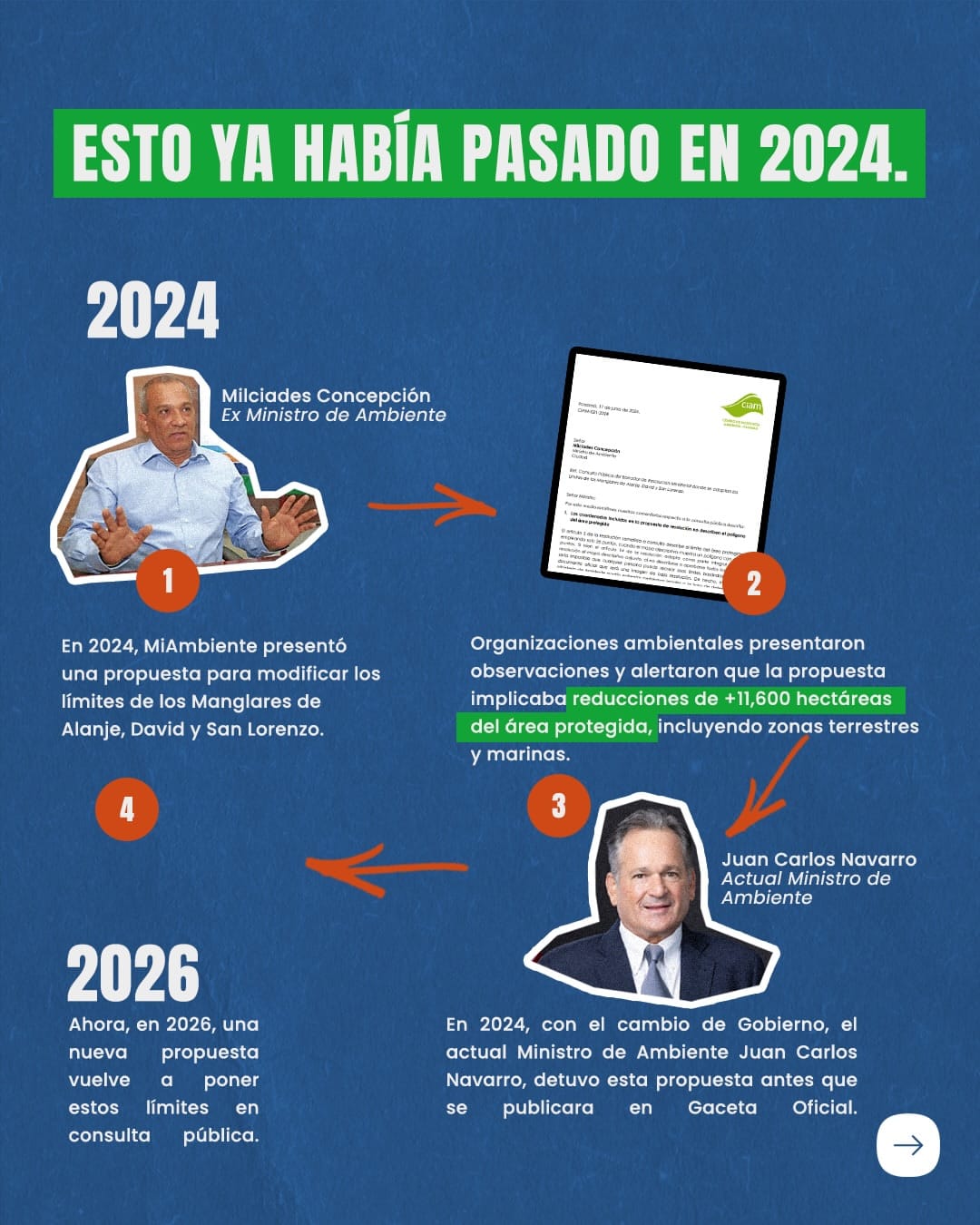
The observations made at the time warned of a possible reduction in the protected area and its consequences for terrestrial and marine ecosystems. Fortunately, the proposal ultimately did not move forward, but two years later, the boundaries of the Chiriquí mangroves are back on the table.
2024: A First Warning about the Mangroves
In 2024, the Ministry of the Environment (previous government) presented a proposal to modify the boundaries of the Alanje, David, and San Lorenzo Mangroves. Environmental organizations submitted observations and warned that the proposal could imply a reduction of more than 11,600 hectares of the protected area, including both terrestrial and marine zones.
That same year, with the change of government and the arrival of Juan Carlos Navarro at the Ministry of the Environment, the proposal was halted before being published in the Official Gazette. It seemed that the discussion had ended, but unfortunately, it hadn’t.
2026: The boundaries are under discussion again
In July 2026, the Ministry of the Environment opened this new public consultation, and with it, some of the questions that had already arisen two years earlier resurfaced: Which territories are included? Which are excluded? What scientific criteria justify the new boundaries? And what consequences could these changes have for one of Panama’s most important coastal ecosystems? The current proposal could reduce the protected area of the Chiriquí mangroves by more than 9,000 hectares, specifically in Alanje, David, and San Lorenzo.
In 2026, we have a new proposal, but also a new opportunity to look closely. Protecting mangroves doesn’t mean opposing development; it means demanding that land-use decisions consider the environmental, social, and economic value of ecosystems that took centuries to form.
Much More Than Trees: The Value of the David Mangroves
The David Mangroves, in Chiriquí, are much more than trees growing between the ocean and the land. Eleven of the twelve mangrove species found in Panama are located here, and some of these trees reach up to 50.9 meters in height.
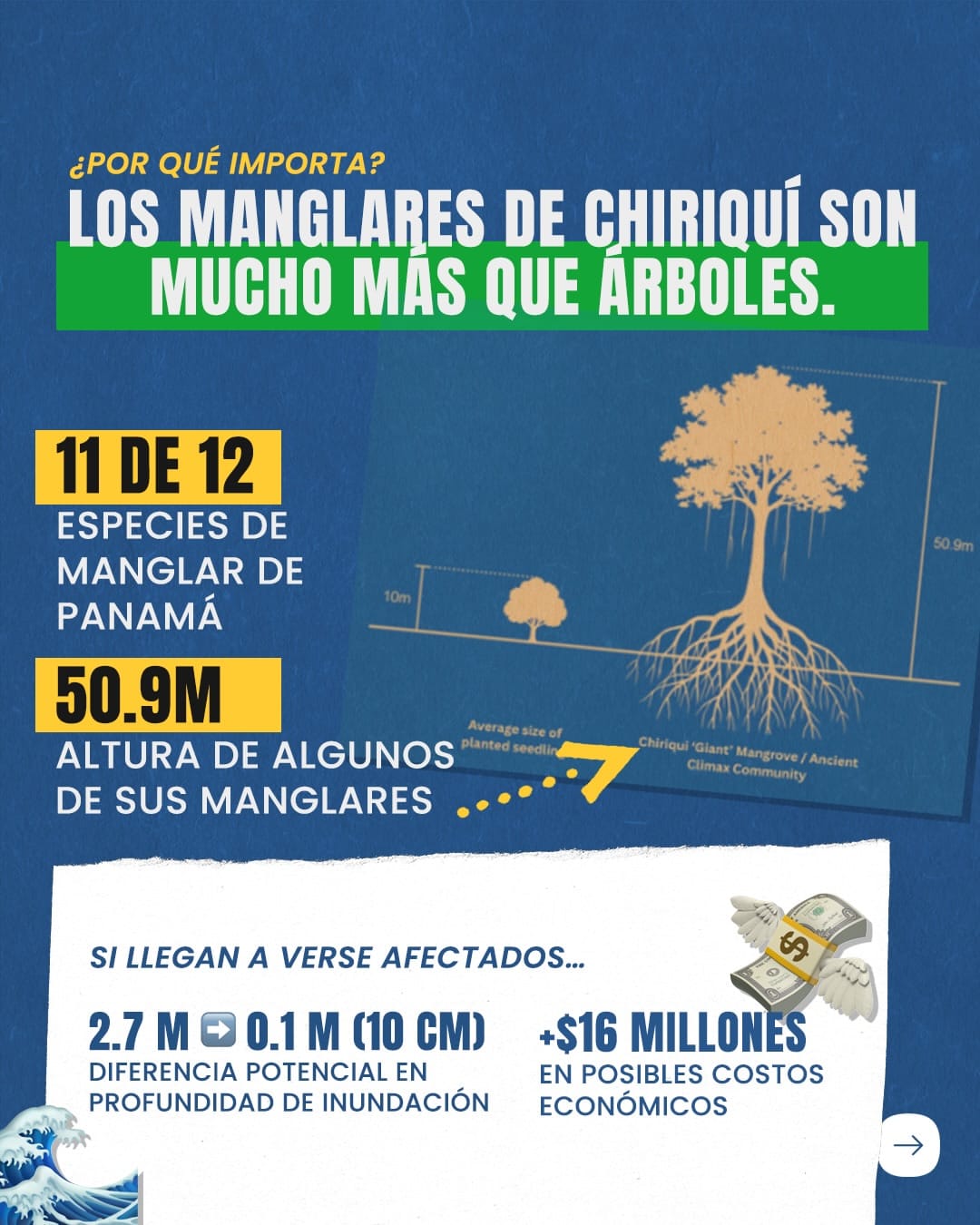
Mangroves support biodiversity, contribute to local economies, protect coastlines, and help reduce the impact of floods and other extreme events. Therefore, modifying the boundaries of their protection deserves an informed, transparent discussion based on scientific evidence.
Puerto Barú is also part of this conversation.
The discussion takes on even greater relevance given the Puerto Barú project in David, Chiriquí, which has generated concern due to its potential impacts on the mangroves and the natural processes that sustain this ecosystem.
The future of Puerto Barú and the future of the David mangroves cannot be analyzed as completely separate issues. When a project of this magnitude exists in an ecologically sensitive area, understanding exactly which areas will be protected and which will not becomes fundamental.
Thank you for participating in the public consultation. We hope for good news, and remember that sharing information is also a way to defend the mangroves.
Get informed and amplify the conversation #DefendTheMangroves


 EN
EN